

+86-18913642321

Liduck.1985@163.com
DAWANG GEARBOX

Views: 0 Author: Site Editor Publish Time: 2026-03-17 Origin: Site


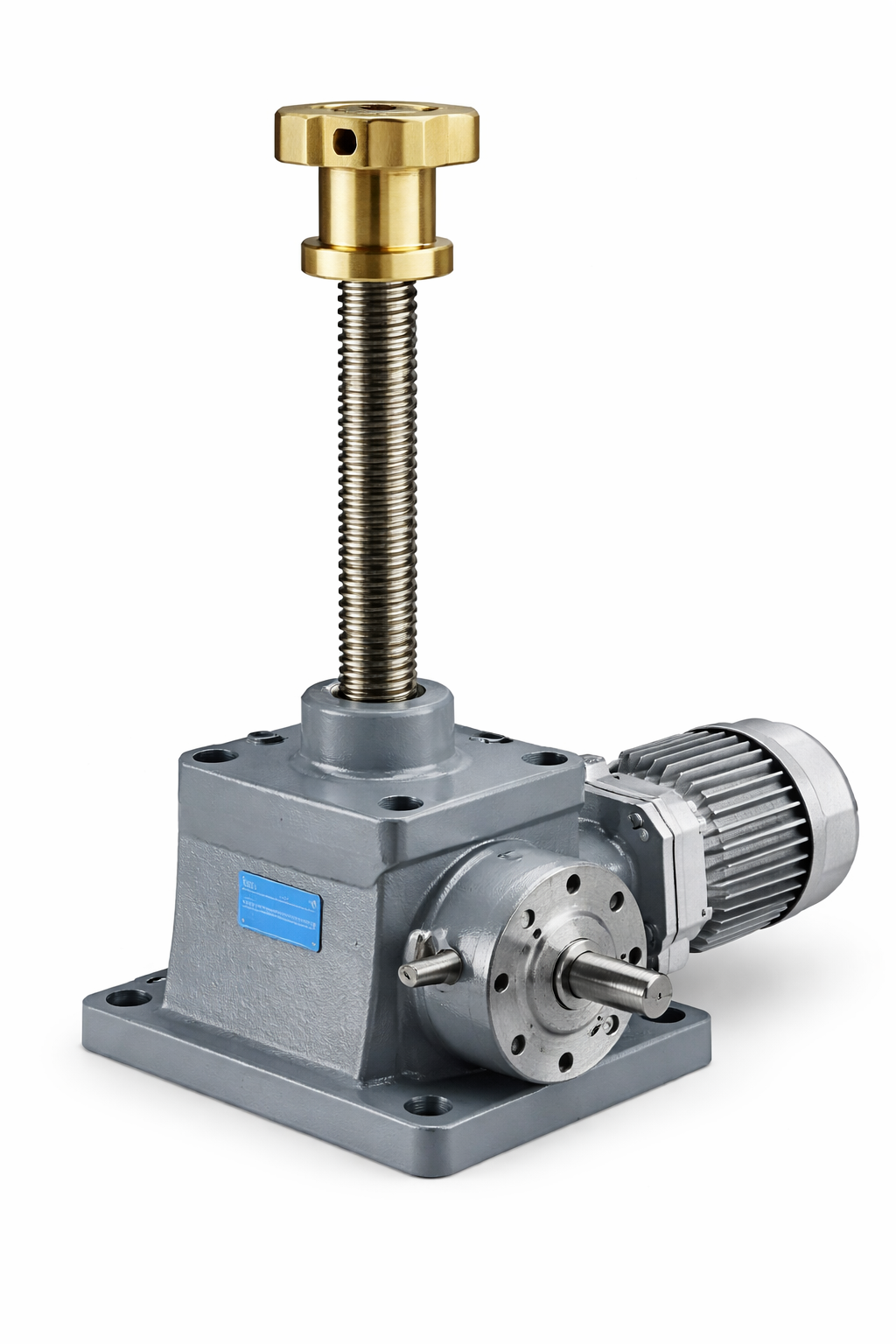
Heavy loads are easy to move. Keeping them stable is harder. That is why many engineers still rely on a Screw Jack system in demanding industrial lifting and support work.
In this article, we explore why modern screw jack systems offer stronger stability and greater load capacity. You will learn how design, load holding, synchronization, and system layout work together to improve safety, control, and long-term performance.
A modern Screw Jack system starts with structural strength. The housing, lifting screw, bearings, and support parts all affect how much load the system can carry without deformation. When the housing is rigid and the internal parts are designed for heavy-duty work, the jack can support larger loads while keeping motion stable. This reduces unwanted movement during lifting and helps the load stay aligned during operation.
Material quality also affects long-term durability. A stronger screw resists wear better, while a reinforced housing helps maintain alignment under repeated force. In heavy industrial work, this matters because stability is not only about one lift. It is about performing the same lift again and again without losing control. That is one reason modern screw jack systems remain trusted in applications where high load capacity and dependable support are both required.
One major reason a Screw Jack is valued in heavy lifting is its load-holding ability. In many machine screw designs, friction and thread geometry help resist backdriving after motion stops. This self-locking behavior makes the system especially useful in vertical lifting, machine support, and adjustment tasks where the load must stay in position without drifting.
This feature improves both safety and working stability. A system that holds the load after lifting reduces the risk of unwanted movement during maintenance or positioning. It also helps operators make precise adjustments because they do not need to fight load rollback every time motion stops. Self-locking is not universal in every design, but where it applies, it remains one of the clearest stability advantages of a modern screw jack system.
Load capacity alone does not guarantee performance. A lifting system must also move in a controlled way. Modern Screw Jack systems improve this by combining precise thread geometry and refined gear design. Better thread accuracy helps reduce irregular movement, while a stable gear train supports smoother torque transfer from the motor or manual input to the lifting screw.
This design quality matters in applications where a heavy load must stop at a specific point. Small movement errors can affect machine alignment, platform level, and production quality. When the screw and gear system works smoothly, the jack gives more repeatable motion and less drift. That is why modern screw jack systems are often selected for lifting jobs that need both strength and accuracy rather than simple up-and-down motion.
One jack may be enough for a compact load, but large structures often need a different solution. Modern Screw Jack systems can connect several jacks through shafts, gearboxes, or drive components so they move together. This spreads the lifting force across several points and helps keep wide or uneven loads balanced during motion.
This matters because most industrial structures are not perfectly rigid. If one side rises faster than another, the structure may tilt, twist, or place too much stress on one jack. A synchronized multi-jack system reduces that risk. It improves balance, supports safer lifting, and helps maintain platform stability. For large machinery, work platforms, and structural support applications, this is one of the biggest practical advantages of modern screw jack systems.
Note: In multi-jack lifting, temperature differences between jacks can reveal uneven load sharing during operation.
The strongest systems usually combine several design decisions, not one. Three choices often matter most:
1. screw type
2. gear set type
3. configuration and ratio
A machine Screw Jack is often preferred where stability and holding force matter most. It usually offers stronger self-locking behavior and handles shock or slow heavy-duty adjustment well. That makes it a good fit for machine support, platform lifting, and structural positioning where the load must stay in place after movement stops.
A ball Screw Jack serves a different purpose. It offers higher efficiency, lower friction, and better speed potential. That makes it useful in systems that cycle often or need tighter servo response. Still, higher efficiency usually reduces natural self-locking ability. For that reason, the best design depends on the job. If the top goal is stable heavy-load holding, machine screw often leads. If the goal is faster movement and repeated precision cycles, ball screw may be the better answer.
Worm gear Screw Jack systems are widely used because they support controlled motion and often pair well with machine screw designs for strong holding. Their behavior suits many heavy-duty industrial applications where slower travel and reliable lifting matter more than high efficiency. They also remain common in traditional multi-jack systems that use shafts and miter boxes for synchronized motion.
Bevel gear systems offer another path. They can improve gearbox efficiency and simplify some multi-jack layouts because they may reduce the number of extra direction-changing components in the system. In some interconnected layouts, bevel gear jacks can be placed directly at system corners, which reduces complexity. This makes them attractive where higher-duty operation or cleaner system layout is important. The final choice depends on whether the project values maximum holding, greater efficiency, or simpler synchronized arrangement.
Gear ratio is one of the most overlooked factors in a Screw Jack system. It directly affects travel speed, input torque, and how the system behaves under load. A slower ratio usually increases torque advantage and supports more controlled movement. That helps in heavy-duty applications where smooth lifting and strong holding are more important than fast travel.
A faster ratio may reduce travel time, but it can also increase torque demand and thermal stress if the system is not sized correctly. This is why gear ratio should be selected around the real application, not just around target speed. The right ratio helps the motor, screw, and gearbox work together in a balanced way. In modern screw jack systems, that balance is one of the key reasons stability and load capacity improve together rather than working against each other.
Design Feature | Main Benefit | Best Value for Stability |
Machine Screw | Strong holding, shock tolerance | Heavy-load support and power-off holding |
Ball Screw | Higher efficiency and speed | Frequent cycling and precise motion |
Worm Gear Set | Controlled travel and common self-locking behavior | Traditional heavy-duty lifting |
Bevel Gear Set | Higher efficiency and fewer layout components | Larger synchronized systems |
Hydraulic systems are well known for high force and fast motion. They work well where speed is important, but they are not always the best answer for stable long-term load holding. A hydraulic system usually depends on pressure, seals, hoses, and fluid condition. That means leakage risk, maintenance needs, and holding complexity become part of the design from the start.
A Screw Jack system offers a more direct mechanical path. In many applications, it can hold load without relying on continuous pressure. This makes it attractive for machine positioning, support lifting, and systems where stable holding is more important than fast travel. For many industrial users, the advantage is not just lifting force. It is the combination of control, cleaner operation, and more predictable long-term behavior.
Electric linear actuators are useful in light and medium automation because they are compact and easy to control. Still, many standard actuator designs are not ideal for very heavy structural lifting or wide synchronized platforms. When load grows, the system needs stronger mechanical support, better rigidity, and often more dependable holding after motion stops.
This is where a Screw Jack system often performs better. It is designed around mechanical advantage and heavy-duty support. It can be used alone or in linked systems to lift, position, or stabilize larger structures. While actuators remain useful in lighter applications, screw jack systems make more sense when the priority is load capacity, structural stability, and dependable support over long periods.
Industrial environments are rarely clean or gentle. Dust, vibration, heat, and mechanical shock can all shorten equipment life. A modern Screw Jack system often handles these conditions well because it uses a rugged mechanical structure and does not depend on hydraulic fluid or fragile high-speed internal motion.
Durability becomes even more important when the system works in heavy-duty service. A simple, strong design usually means fewer leak-related issues and more predictable wear patterns. This helps plants reduce service interruptions and keep lifting equipment available when needed. In harsh environments, long-term reliability is not a small advantage. It is often the deciding factor. That is why screw jack systems remain a preferred option in many heavy industrial settings.
Tip: When comparing lifting methods, evaluate holding stability and maintenance risk, not just travel speed or peak force.
Even a strong Screw Jack can perform poorly in a weak layout. Stability is shaped by how the system is installed, guided, and driven. In practice, three layout issues matter most: load sharing, side-load control, and mounting choice.
In theory, multiple jacks share a load evenly. In practice, real structures are not perfectly rigid. One side may carry more force because of alignment error, frame flex, or installation differences. That means one Screw Jack may run hotter and work harder than the others even though the total load looks correct on paper.
Poor load sharing reduces stability and shortens service life. It can also create tilt or twist during lifting. That is why multi-jack systems should be checked during installation and early operation. When load is distributed more evenly, the system lifts more smoothly and each jack works within a safer range. Balanced load sharing is one of the most important steps in achieving both high capacity and long-term reliability.
A Screw Jack is designed mainly to create thrust. It should not be expected to absorb large side loads or bending force by itself. If the load path allows lateral force into the spindle, wear will increase and motion stability will fall. This is a common reason why a good product performs poorly in the field.
Proper guides solve that problem. Rails, supports, and rigid structural alignment allow the jack to focus on axial motion while the surrounding framework handles lateral loads. This improves positioning accuracy and reduces thread and bearing stress. In many systems, good guidance is just as important as jack size. Without it, even a well-rated screw jack may lose stability much earlier than expected.
Mounting style affects both usable space and system behavior. A translating or keyed non-rotation design may mount below the load and give open access above, but it also needs space below for the retracted screw. A keyed-for-travel-nut layout may mount flush to a surface, yet it requires space for the rotating screw length. Special mounts like clevis or trunnion designs can support arc motion in shorter-travel systems.
Drive selection also affects stability. The motor must handle not only running torque from the jack but also added drag from shafts, couplings, miter boxes, and support components. In some layouts, this extra drag may increase horsepower needs significantly. A stable system is not built from the jack alone. It depends on the full drive path working as one coordinated design.
Layout Factor | Main Risk if Ignored | Stability Benefit When Managed Well |
Uneven Load Distribution | Overloaded jacks and tilt | Better balance and longer service life |
Poor Guidance | Side-load wear and unstable motion | Smoother travel and better accuracy |
Incorrect Mounting Choice | Space conflict or poor load path | Better support and easier installation |
Undersized Drive System | Lost torque and poor synchronization | Reliable lifting across full system |
Modern Screw Jack systems create strong value in industrial lifting because they combine high capacity and controlled motion. In press adjustment, machine leveling, mold support, and heavy equipment positioning, the load must move carefully and stay where it is placed. This is exactly where screw jack systems perform well.
Their ability to hold position after motion stops is especially useful in equipment that remains under load for long periods. Instead of acting only as a lifting device, the system becomes part of the machine support structure. This improves reliability in production environments where repeatable setup and stable positioning directly affect output quality and maintenance efficiency.
Many support applications require more than one short lift. They require a load to remain supported safely while work is done around it. Modern Screw Jack systems fit this need well in maintenance platforms, structural adjustment, bridge support tasks, and heavy equipment service setups. Their controlled movement and dependable holding force reduce risk during long working periods.
This is where stability becomes more valuable than speed. A system that moves slowly but stays stable gives technicians more confidence and protects the structure better. In maintenance and support work, that kind of predictability often matters more than rapid travel. It is one of the reasons modern screw jack systems continue to be selected for critical support tasks.
Modern Screw Jack systems also bring value to automation and material handling. Conveyors, synchronized lifts, packaging equipment, and positioning platforms often need repeatable motion under controlled load. A linked screw jack system can raise or lower a structure in a balanced way while keeping the platform level across several lifting points.
This helps automation lines stay more accurate and dependable. It also supports integration into larger mechanical systems where lifting is only one part of the process. In these environments, the screw jack is valued not simply for force, but for how it combines support, motion control, and synchronization in one system. That combination gives it a lasting role in modern industrial design.
Note: Large platforms usually gain more stability from synchronized multi-jack lifting than from single-point lifting methods.
Application Area | Why Screw Jack Systems Fit Well | Main Value Delivered |
Presses and Heavy Machinery | Stable support under high load | Precise adjustment and strong holding |
Structural Support | Safe long-term load holding | Better maintenance safety and control |
Automation and Conveyors | Synchronized controlled motion | Repeatability and platform balance |
Modern Screw Jack systems stand out because they combine load capacity, stable motion, and reliable holding in one solution. When the right design, layout, and synchronization method are chosen, they deliver safer lifting and better long-term performance in demanding industrial work.
Suzhou Dawang Transmission Equipment Co., Ltd. adds further value through high-precision manufacturing, flexible screw jack configurations, and dependable technical support. This helps customers build more stable, efficient, and durable lifting and positioning systems.
A: A Screw Jack system lifts, supports, or positions heavy loads through controlled linear motion.
A: A Screw Jack improves stability through self-locking, rigid support, and synchronized multi-point lifting.
A: In many holding tasks, a Screw Jack offers cleaner operation, steadier positioning, and lower leak risk.
A: They are used in heavy machinery, platforms, conveyors, maintenance lifting, and structural support.
A: A Screw Jack may lose performance from overload, poor guidance, side loads, or incorrect installation.


