

+86-18913642321

Liduck.1985@163.com
DAWANG GEARBOX

Views: 0 Author: Site Editor Publish Time: 2025-10-29 Origin: Site


Have you ever wondered how the intricate process of plastic extrusion works so seamlessly? At the heart of it lies the plastic extruder gearbox, a critical component ensuring efficiency and quality in production. This article delves into its pivotal role, explaining how it converts motor power to optimal screw speed and torque. You'll learn about its components, functionality, and importance in maintaining smooth extrusion operations. Join us as we explore the fascinating mechanics behind this essential machinery.
A plastic extruder gearbox is a vital mechanical component in the plastic extrusion process. It connects the motor to the extruder screw, controlling the speed and torque needed to melt and push plastic material through the extruder barrel.
Simply put, the gearbox adjusts the motor's high-speed rotation to a slower, more powerful rotation suitable for the extruder screw. The motor typically runs at thousands of revolutions per minute (RPM), but the screw needs to turn much slower, usually between 20 and 100 RPM, to ensure proper melting and mixing of the plastic. The gearbox reduces the speed while increasing torque, allowing the screw to push the molten plastic forward with enough force.
A typical plastic extruder gearbox consists of several key parts:
● Input Shaft: Connected to the motor, it receives the high-speed rotation.
● Gears: These are the heart of the gearbox, responsible for changing speed and torque. Different types of gears (helical, planetary, bevel) may be used depending on the design.
● Output Shaft: Delivers the adjusted speed and torque to the extruder screw.
● Housing: Protects the internal components and contains lubricants to reduce wear and tear.
● Bearings and Seals: Support the shafts and prevent lubricant leakage.
Each component works together to ensure smooth power transmission from the motor to the screw.
The gearbox plays several critical roles in the extrusion process:
● Speed Control: It sets the screw’s rotation speed to optimize melting and mixing.
● Torque Amplification: It increases the force needed to push thick, molten plastic through the die.
● Motor Protection: By reducing the load on the motor, it prevents overheating and extends motor life.
● Smooth Operation: It ensures consistent screw movement, avoiding vibrations or sudden stops that could damage the machine or affect product quality.
Without the gearbox, the motor’s high speed would cause the screw to spin too fast, resulting in poor melting and uneven extrusion. The gearbox ensures the process runs efficiently, producing high-quality plastic products.
A plastic extruder gearbox plays a crucial role in converting the motor’s power into the right speed and torque for the extruder screw. Understanding this conversion helps explain how the extrusion process runs smoothly and efficiently.
The motor driving the extruder usually spins very fast—often around 1,400 to 3,000 revolutions per minute (RPM). However, the extruder screw needs to turn much slower, typically between 20 and 100 RPM. This slower speed allows the plastic material to melt evenly and be pushed forward steadily.
The gearbox acts as a speed reducer. It takes the high-speed rotation from the motor and slows it down to the ideal screw speed. This slowdown is essential because if the screw spun too fast, the plastic wouldn’t melt properly, causing defects in the final product.
Slowing down the screw speed isn’t the only job. The gearbox also increases torque—the twisting force that pushes the molten plastic through the extruder barrel and out the die.
Think of torque as strength. The motor alone can’t provide enough torque at low speeds to push thick, melted plastic. The gearbox increases this torque by trading off speed. When speed decreases, torque increases proportionally, allowing the screw to push the plastic with enough force.
This balance between speed and torque ensures the extrusion process is both smooth and powerful.
Imagine riding a bicycle up a hill. When the terrain gets steep, you shift to a lower gear. This gear reduces your pedaling speed but makes pedaling easier by increasing the force you apply to the pedals.
The gearbox in a plastic extruder works the same way. It lowers the screw’s speed but increases the torque, making it easier for the screw to push the molten plastic forward.
This analogy helps visualize why gearboxes are essential: they optimize the motor’s power for the specific needs of the extrusion process.
The gearbox is a key player in the plastic extrusion process. It controls how the extruder screw turns, boosts the force needed to push melted plastic, and protects the motor from damage. Here’s why the gearbox matters so much:
The extruder screw needs to spin at just the right speed—usually between 20 and 100 RPM. The gearbox adjusts the motor’s fast rotation down to this slower, precise speed. This control is crucial because too fast or too slow can ruin the plastic melt quality. The gearbox ensures the screw rotates smoothly and consistently, which helps produce uniform plastic products without defects.
Pushing molten plastic through the extruder barrel and die requires a lot of force, or torque. The motor alone can’t provide enough torque at low speeds. The gearbox increases torque by reducing the screw speed. This tradeoff lets the screw push thick, melted plastic steadily and powerfully, preventing jams or uneven flow. Without enough torque, the extrusion process would stall or produce poor-quality output.
The gearbox also protects the motor. By adjusting speed and increasing torque, it reduces the load on the motor shaft. This prevents overheating and mechanical stress, extending the motor’s lifespan. A well-matched gearbox keeps the motor running efficiently and reliably, reducing downtime and maintenance costs.
● Smooth Operation: The gearbox helps avoid vibrations and sudden stops that can damage the machine or spoil the plastic product.
● Direction Control: Some gearboxes can reverse screw rotation, useful for clearing blockages or maintenance.
In short, the gearbox acts as the heart of the power transmission system in a plastic extruder. It balances speed and strength, ensuring the extrusion process runs smoothly, efficiently, and safely.
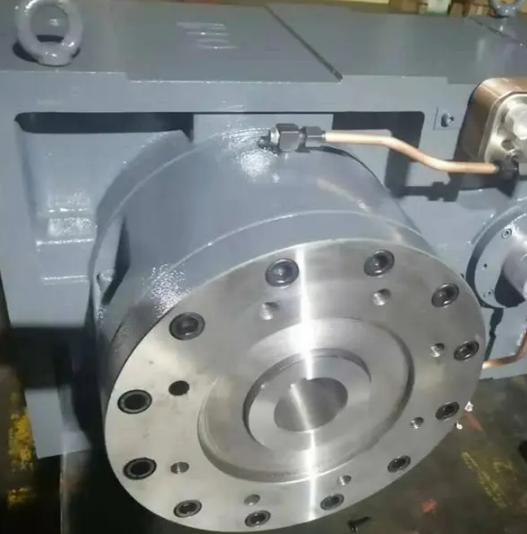
Plastic extruders rely on gearboxes to convert motor speed into the right torque and rotation speed for the screw. Different gearbox types suit different extrusion needs based on size, torque, efficiency, and durability. Here are the most common gearboxes used in plastic extruders:
Helical gearboxes are among the most popular choices in plastic extrusion. They use helical gears, which have angled teeth set at a helix angle. This design allows for smoother and quieter operation compared to straight-cut gears.
● Advantages:High efficiency and load capacity
○ Smooth, quiet running reduces vibration
○ Good for medium to high torque applications
● Typical Use: Helical gearboxes often power extruder screws in medium-duty machines where consistent torque and noise reduction matter.
Planetary gearboxes consist of a central sun gear, multiple planet gears, and an outer ring gear. This setup distributes the load evenly, providing high torque in a compact size.
● Advantages:Very high torque output in a small footprint
○ High efficiency and durability
○ Excellent for applications requiring precise speed control
● Typical Use: Planetary gearboxes are preferred in high-performance extruders that need compact design and high torque, such as those used in advanced plastics manufacturing.
Bevel helical gearboxes combine bevel gears and helical gears, allowing power transmission at right angles with high efficiency.
● Advantages:Enables right-angle power transmission, saving space
○ Smooth operation with high torque capacity
○ Suitable for heavy-duty extrusion machines
● Typical Use: These gearboxes are common in extruders where the motor and screw shafts are perpendicular, optimizing machine layout without sacrificing performance.
Maintaining a plastic extruder gearbox is crucial for ensuring smooth extrusion operations and minimizing downtime. Despite their robust design, gearboxes face several challenges during use. Understanding common issues and applying preventive maintenance can extend gearbox life and keep production running efficiently.
● Overheating: Excess heat can damage gears and bearings, often caused by insufficient lubrication or overloading.
● Lubricant Contamination: Dirt, moisture, or metal particles in the lubricant can accelerate wear and cause gear failure.
● Wear and Tear: Continuous operation leads to gradual gear tooth wear, bearing degradation, and seal damage.
● Misalignment: Improper installation or shaft misalignment causes uneven gear loading, leading to premature failure.
● Noise and Vibration: Unusual sounds or vibrations often signal gear damage, bearing issues, or imbalance.
● Seal Leakage: Worn seals allow lubricant leaks and contaminants to enter, risking internal damage.
● Regular Lubrication Checks: Monitor lubricant levels and quality. Use manufacturer-recommended lubricants and change them on schedule.
● Temperature Monitoring: Use sensors or manual checks to detect overheating early.
● Visual Inspections: Check for leaks, unusual wear, or damage on housing, seals, and shafts.
● Alignment Verification: Ensure motor and gearbox shafts are correctly aligned during installation and after maintenance.
● Vibration Analysis: Periodically analyze vibration patterns to catch early signs of gear or bearing issues.
● Clean Environment: Keep the gearbox and surrounding area clean to prevent contamination.
● Overheating: Check lubricant type and level, reduce load if possible, and inspect cooling systems.
● Excessive Noise: Identify source by isolating components; worn gears or bearings typically need replacement.
● Lubricant Leakage: Replace seals and inspect housing for cracks or damage.
● Loss of Torque or Speed: Inspect gears for wear or damage; verify motor performance and shaft alignment.
● Vibration: Balance rotating parts and replace worn bearings or gears.
Timely maintenance and early problem detection prevent costly repairs and downtime. A well-maintained gearbox ensures consistent extrusion quality and machine reliability.
Plastic extruder gearboxes have evolved significantly, and the future holds even more exciting advancements. These improvements focus on design innovation, automation integration, and energy efficiency, all aimed at boosting performance and reliability.
Modern gearbox designs emphasize compactness, durability, and precision. Manufacturers are using advanced materials like high-strength alloys and composites to reduce weight while improving strength. These materials help gearboxes handle higher torque loads without increasing size.
Innovations in gear tooth geometry and surface treatments reduce friction and wear, extending gearbox life. For example, improved helical and planetary gear designs offer smoother power transmission and less noise.
Modular gearbox designs are also becoming popular. They allow easier customization and faster maintenance by swapping out worn parts without replacing the entire unit. This flexibility reduces downtime and maintenance costs.
Automation and the Internet of Things (IoT) are transforming gearbox monitoring and control. Smart gearboxes equipped with sensors can track temperature, vibration, and lubrication status in real time. This data helps operators detect issues early, preventing failures before they happen.
IoT connectivity allows remote monitoring and predictive maintenance scheduling. Instead of waiting for a breakdown, maintenance can be planned based on actual gearbox condition. This approach saves costs and improves production uptime.
Automation also enables precise control of screw speed and torque through advanced drive systems linked to gearboxes. This integration optimizes extrusion parameters dynamically, improving product quality and energy use.
Energy efficiency is a major focus in gearbox technology. New designs minimize internal friction and heat generation, reducing power loss. High-efficiency lubricants and sealed housings help maintain optimal operating conditions.
Variable speed drives combined with gearboxes allow motors to run at optimal speeds rather than full power constantly. This reduces electricity consumption and lowers operating costs.
Some manufacturers are exploring regenerative braking systems in extrusion lines, where kinetic energy from decelerating components is recovered and reused. Although still emerging, these technologies could further improve energy savings.
Understanding how a plastic extruder gearbox works is crucial for efficient extrusion processes. The gearbox converts motor speed into the appropriate torque and rotation speed for the extruder screw, ensuring smooth and powerful plastic extrusion. Selecting the right gearbox and maintaining it properly enhances production quality and longevity. Companies like Dawang offer advanced gearboxes that provide optimal performance and durability, making them a valuable addition to any plastic extrusion operation.
A: A Plastic Extruder Gearbox connects the motor to the extruder screw, adjusting speed and torque for efficient plastic extrusion.
A: The Plastic Extruder Gearbox reduces motor speed, increasing torque to push molten plastic through the extruder.
A: It controls screw speed, boosts torque, and protects the motor, ensuring efficient and high-quality plastic extrusion.
A: Overheating, lubricant contamination, wear, misalignment, and seal leakage are common issues needing maintenance.


