

+86-18913642321

Liduck.1985@163.com
DAWANG GEARBOX

Views: 0 Author: Site Editor Publish Time: 2026-03-16 Origin: Site


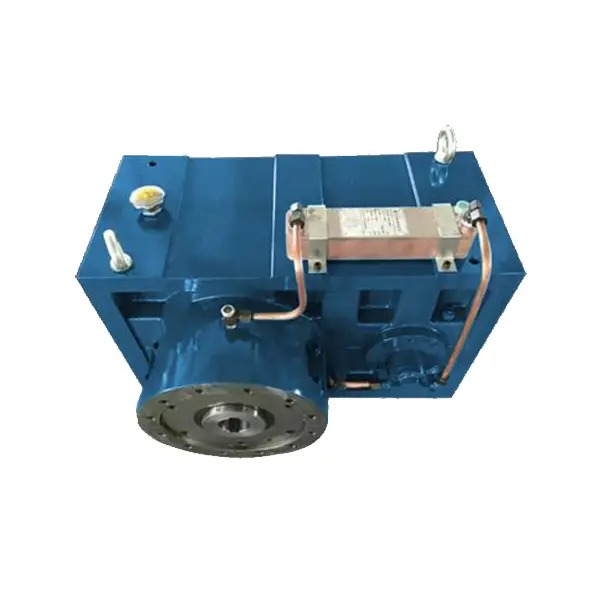
Why do some drive systems waste power so quickly? In many factories, the answer lies in the wrong Gear Motor choice. Efficiency, noise, and durability often depend on gear design more than many buyers expect.
In this article, we explore why helical gear motors deliver high-efficiency performance in industrial applications. You will learn how they improve torque transmission, reduce noise and wear, and create long-term value in demanding operating conditions.
The main engineering strength of a helical Gear Motor comes from its tooth geometry. Unlike straight-cut spur gears, helical gears engage gradually. The teeth do not strike each other all at once. Instead, contact builds progressively along the angled tooth surface. This smooth transfer reduces shock and helps the system transmit power more evenly.
That gradual meshing improves efficiency because less energy is lost through sudden impact, vibration, and unstable loading. It also helps the motor run more smoothly under continuous duty. In practical terms, this means more of the motor’s input power becomes useful output torque. For plants running conveyors, mixers, packaging lines, or material handling systems all day, that improvement can translate into lower energy waste and more stable production.
A helical Gear Motor usually keeps more than one tooth pair in contact at the same time. This is called a higher contact ratio. It matters because the transmitted load is spread across a longer line of engagement instead of concentrating on one small point. Better load distribution reduces local stress on the gear teeth and lowers the chance of early wear.
This design advantage is one reason helical gear motors perform so well in heavy-duty applications. When the load is shared more evenly, the gear set can handle higher torque more safely and more consistently. It also supports smoother rotation under changing operating conditions. That is especially useful in industrial systems where load may vary during startup, acceleration, or continuous processing.
Efficiency is not only a lab number. It affects real operating cost. A helical Gear Motor often reaches efficiency levels around 90% to 98%, depending on design, lubrication, ratio, and application conditions. That range is much stronger than many worm gear systems and highly competitive in continuous industrial service.
Over time, higher efficiency means lower power consumption and less wasted energy as heat. This reduces electrical cost and helps protect internal components from thermal stress. In facilities with many drive units, even a small efficiency gain per motor can lead to meaningful savings across a full year. That is why energy-conscious buyers often look beyond purchase price and focus on long-term power use instead.
Noise and vibration often reveal how power is being transmitted inside a gearbox. In a helical Gear Motor, angled teeth engage progressively, which reduces impact during meshing. The result is smoother rotation and lower vibration compared with simpler gear forms. This is not only about comfort. It is also about system health.
Lower vibration can improve alignment stability, reduce fatigue in nearby parts, and help the whole machine run more quietly. That makes helical gear motors a strong choice in packaging lines, food processing, automated conveyors, and indoor industrial equipment where noise control matters. Smooth motion also improves the operator experience and can support better long-term reliability in connected components.
Note: Lower noise often reflects smoother tooth engagement, but it should not replace proper checks on alignment, lubrication, and actual load conditions.
A helical Gear Motor is often selected because it can transmit high torque in a compact footprint. The angled teeth and greater contact area allow the gear set to manage heavier loads than many simpler alternatives. This makes it useful in systems that need strong output force without oversized drive assemblies.
High torque capacity is important in conveyors, agitators, crushers, lifting systems, and production equipment where the load must move reliably under resistance. In these settings, the motor does not just need to turn. It needs to keep turning under pressure. Helical gear motors do that well because their design balances load sharing, smooth transmission, and structural strength.
Durability is one of the strongest business advantages of a helical Gear Motor. Because load is distributed across multiple teeth and impact is reduced during meshing, the gear set tends to wear more slowly than systems that rely on sudden tooth contact. Lower wear supports longer service life and reduces how often the unit needs inspection or replacement.
This matters even more in 24/7 operations. Frequent shutdowns are expensive, especially in automated plants where one failed drive can affect the whole line. A durable gear motor helps reduce these interruptions. It also lowers maintenance pressure on plant teams because the drive system remains stable for longer periods between service intervals.
A good Gear Motor must fit the machine as well as it fits the load. Helical gear motors are often valued for their compact and adaptable design. Inline, parallel shaft, and bevel-helical arrangements give engineers several ways to manage space while keeping strong torque transmission.
This flexibility is useful in modern equipment design where machines must stay compact without losing performance. A smaller footprint helps in packaging equipment, conveyor frames, elevators, robotics, and automated production cells. It also makes integration easier when the drive system must work within tight mounting or structural limits.
Helical Gear Motor systems are not limited to one industry. They are used in food processing, logistics, warehousing, automotive manufacturing, material handling, mining, HVAC, and many other fields. Their wide use comes from one simple fact: they adapt well to different load and layout conditions.
This adaptability is an engineering benefit, not just a commercial one. A motor platform that can support several mounting options, ratios, and torque ranges is easier to standardize across equipment lines. For OEMs and industrial buyers, that means simpler selection, fewer spare-part complications, and more flexible machine design.
Engineering Feature | Main Benefit | Practical Value |
Gradual tooth meshing | Lower shock during engagement | Smoother running and lower noise |
High tooth contact ratio | Better load distribution | Higher torque and reduced wear |
Compact gearbox design | Efficient use of installation space | Easier machine integration |
Strong torque transmission | Better performance under load | Reliable operation in heavy-duty systems |
Tip: When comparing models, ask not only for rated torque, but also for service factor, efficiency range, and expected duty cycle.
A spur Gear Motor uses straight teeth. It is often simpler and cheaper to manufacture. In low-speed and low-load tasks, it can work well. However, spur gears engage suddenly, which creates more impact, more vibration, and often more noise. That makes them less attractive in high-speed or continuous-duty environments.
A helical gear motor performs better when the application demands smoother motion, higher load capacity, and quieter running. Its angled teeth reduce impact and allow more even load transfer. While spur gears may still suit basic duty, helical gear motors are usually the stronger engineering choice for demanding industrial systems.
Worm gear systems are useful when very high reduction ratios are needed in a compact space. Still, their efficiency is often much lower because of sliding contact between the worm and the gear. Much of the input energy turns into heat instead of usable output. That makes a worm Gear Motor less ideal for continuous-duty operation where power cost matters.
A helical gear motor usually runs much more efficiently and stays cooler during long operating cycles. It also provides better energy transfer under sustained load. For this reason, many buyers prefer helical designs in applications where the motor runs often, energy savings matter, and thermal control is important.
Bevel gear systems are helpful when shafts must intersect at an angle, usually 90 degrees. They are common in right-angle transmission layouts. In some machines, a bevel-based Gear Motor is the best fit because of structural constraints. Still, for many parallel or inline transmission tasks, helical gear motors remain the more efficient and quieter solution.
The real comparison depends on layout. If the application requires right-angle power flow, bevel-helical gear motors can combine both benefits. If not, a pure helical arrangement may deliver simpler, more efficient power transmission. The best choice is driven by shaft arrangement, torque requirement, and installation space, not by gear type alone.
Gear Motor Type | Main Strength | Main Limitation | Best Fit |
Helical Gear Motor | High efficiency, low noise, strong torque | Higher manufacturing cost | Continuous-duty industrial systems |
Spur Gear Motor | Simple and economical | More noise and lower load smoothness | Basic low-speed applications |
Worm Gear Motor | Compact high reduction | Lower efficiency and more heat | Intermittent compact drives |
Bevel-Helical Gear Motor | Right-angle transmission and good torque | More complex layout | Space-limited angled drives |
Continuous-duty environments are where the strengths of a helical Gear Motor become most visible. When a system runs hour after hour, efficiency, heat control, wear rate, and vibration all matter more. A gear motor that is only acceptable in short cycles may become expensive during full production.
Helical gear motors often win because they balance several priorities at once. They deliver strong torque, reduce mechanical shock, lower power loss, and remain quiet under load. That combination makes them especially useful in industries where uptime, energy savings, and dependable performance drive buying decisions.
Before choosing a helical Gear Motor, buyers should define the application clearly. A strong selection usually begins with these points:
● required torque and output speed
● duty cycle and operating hours
● mounting arrangement and space
● environmental conditions and maintenance access
A helical Gear Motor must be matched to the real load. If torque is too low, the motor may overheat or fail early. If the ratio is wrong, the output speed may not fit the machine. This is why engineers start from operating requirements, not from catalog size alone.
Torque, speed, and reduction ratio work together. A heavy load may need lower speed and higher output torque. A faster conveyor may need a different balance. Good selection means finding the ratio that gives the right motion without creating excess heat or mechanical stress. This is one of the most important steps in building an efficient and durable drive system.
The same Gear Motor may perform very differently in different environments. Dust, moisture, washdown cleaning, high ambient temperature, and continuous operation all affect how the system should be designed. A motor that works well indoors on light duty may not survive long in a hot, dirty industrial plant.
Duty cycle matters just as much. A motor that runs a few times per day faces a different thermal and wear pattern than one that runs 24/7. Buyers should always define actual operating hours, startup frequency, and load variation before choosing a model. That information helps prevent undersized or mismatched selections.
A helical Gear Motor is only as useful as the support behind it. Technical selection help, documentation, customization, spare parts, and after-sales service all affect the real value of the purchase. This is especially important for OEMs and industrial users who need dependable supply and quick problem resolution.
A strong manufacturer helps buyers choose the correct ratio, housing type, mounting style, and motor specification before the system reaches the field. That reduces selection mistakes and helps the equipment perform as expected. Good support is not just a service benefit. It is part of the engineering outcome.
Tip: When selecting a supplier, ask about efficiency data, thermal limits, customization range, and availability of technical matching support.
Conveyors are one of the most common uses for a helical Gear Motor. These systems need smooth, quiet, and continuous operation. Sudden shock, excess noise, or high energy loss can create problems across the line. Helical gear motors fit well because they offer steady torque and low-vibration performance during long runs.
This is especially important in warehouses, airports, packaging plants, and automated logistics systems. In those environments, the drive must support uptime, gentle product handling, and predictable speed. A helical gear motor does that well, which is why it remains a preferred solution in material flow equipment.
Food and packaging lines often need low noise, reliable output, and long operating hours. A helical Gear Motor supports these needs through smooth motion and strong efficiency. It also helps reduce vibration in sensitive equipment where product handling and process stability matter.
In many cases, compact size is another benefit. Machines in these industries often have limited installation space, yet still need dependable torque. Helical gear motors provide a good balance between performance and integration, especially when matched to the correct housing and protection requirements.
Heavy-duty environments such as mining, cement, steel, mixing, and bulk material handling demand more from a Gear Motor. These applications often include high resistance, long duty cycles, and rough working conditions. Helical gear motors are a strong fit because they combine high torque capacity, durability, and stable motion under load.
Their smoother meshing action also helps reduce shock on connected machinery. That can improve the life of shafts, couplings, and structural supports around the motor. In heavy industry, this is a major advantage because one drive problem can disrupt a large and expensive process.
Application Area | Why Helical Gear Motors Fit | Main Value Delivered |
Conveyors and logistics | Smooth continuous motion | Quiet operation and energy savings |
Food and packaging | Compact, low-vibration drive | Stable process performance |
Heavy industrial equipment | High torque and durability | Reliable 24/7 load handling |
Note: In high-duty applications, lubrication quality and alignment can influence real efficiency almost as much as gearbox design.
A high-performance Gear Motor can improve energy efficiency, torque output, and long-term operating stability in demanding industrial systems. When the right design is matched to load, speed, and working conditions, it helps reduce noise, lower maintenance needs, and improve overall production efficiency.
Suzhou Dawang Transmission Equipment Co., Ltd. supports this value through reliable helical gear motor solutions, precision manufacturing, and flexible technical support. This helps customers build more efficient, durable, and application-ready drive systems.
A: A Gear Motor combines an electric motor and gearbox to deliver controlled speed and higher output torque.
A: A helical Gear Motor uses gradual tooth engagement, which reduces shock, energy loss, noise, and vibration.
A: A Gear Motor is widely used in conveyors, packaging lines, food processing equipment, and heavy industrial machinery.
A: In many continuous-duty systems, a helical Gear Motor offers higher efficiency, less heat, and lower operating cost.
A: A Gear Motor may lose performance because of poor lubrication, overload, misalignment, or unsuitable working conditions.


