

+86-18913642321

Liduck.1985@163.com
DAWANG GEARBOX

Views: 0 Author: Site Editor Publish Time: 2026-03-12 Origin: Site


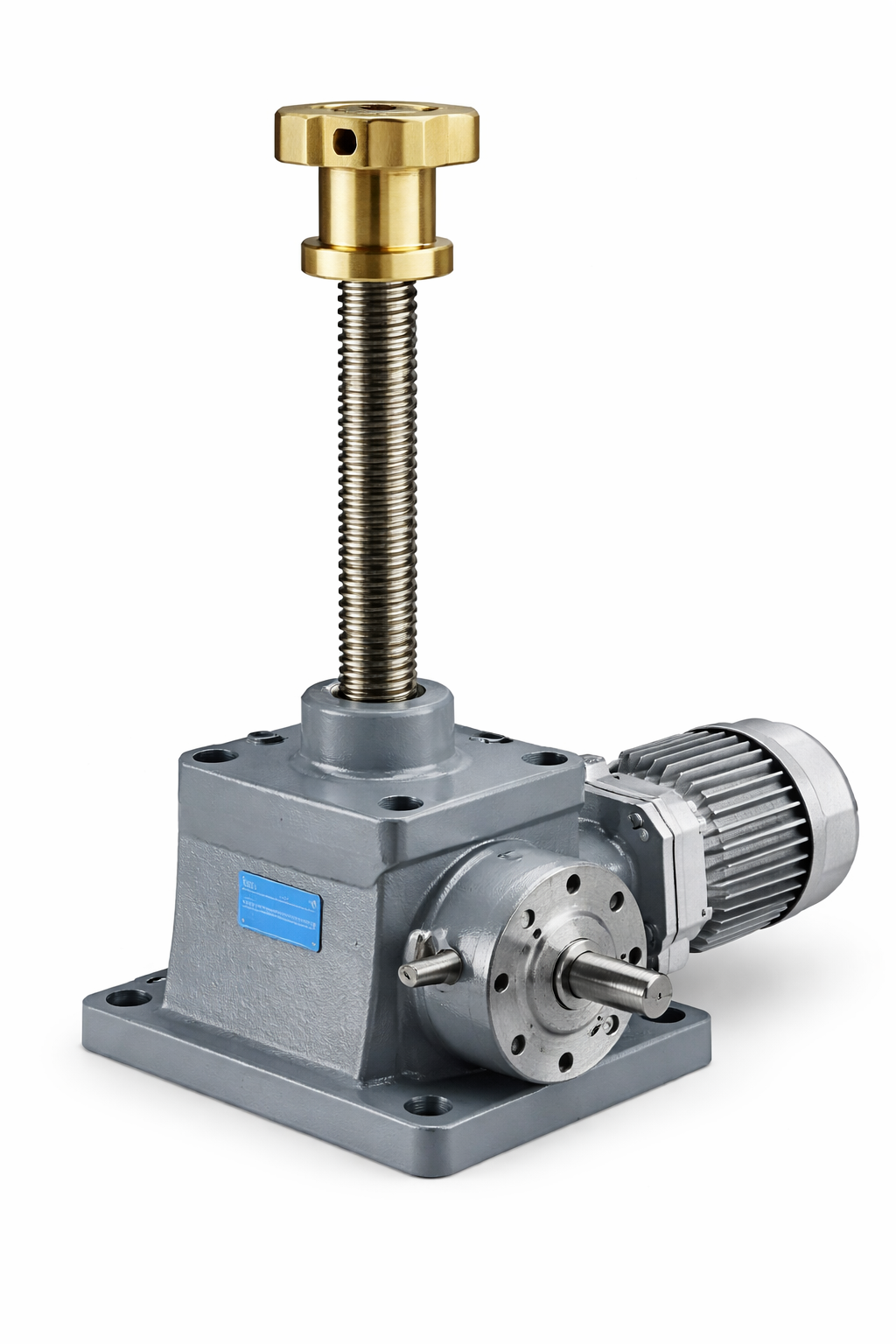
Heavy loads do not forgive small mistakes. In industrial lifting, even a small positioning error can affect safety, balance, and production efficiency. That is why many engineers rely on a Screw Jack when they need both strength and precise control.
In this article, we explore why screw jacks are an ideal choice for industrial lifting. You will learn how they improve accuracy, stability, and safety, and why they are often preferred in heavy-duty applications.
A Screw Jack is designed for controlled lifting under heavy load. Its screw and gear system turns input torque into linear travel. This motion is simple, stable, and easy to manage. It does not rely on fluid pressure or fast moving parts. Because of this, it can lift or support heavy structures in a steady way, which is useful when accuracy matters more than speed.
This benefit is clear in equipment leveling, platform lifting, and machine adjustment. In these jobs, the goal is not only to raise the load. We also need to stop at the correct height and hold it there. A screw jack does both very well. It gives buyers a lifting solution that balances strength and control.
Many lifting tools can move a load. Fewer can place it exactly where it should stay. A Screw Jack performs well in this area because its travel is mechanical and predictable. Operators can make small height changes without sudden movement. That helps when a machine base must be aligned, a platform must be leveled, or a frame must be adjusted during installation.
Accurate positioning also improves production quality. When the lifting system repeats the same motion each time, setup errors fall and downtime drops. This is important in plants that depend on repeatable results. For many B2B users, precision is not a small detail. It is one of the main reasons they choose a screw jack over other lifting options.
Safety is one of the strongest advantages of many Screw Jack designs. In many applications, the jack can hold the load in place when movement stops. This self-locking behavior helps prevent unwanted backdriving. It is especially useful in vertical lifting, long holding periods, and equipment support tasks where a load must remain stable after positioning.
This feature helps reduce risk during power loss or shutdown. It also supports safer operation in maintenance platforms, machine tables, and heavy adjustment systems. Still, buyers should remember that self-locking depends on design details such as screw type, ratio, and load condition. It is a major benefit, but it should always be verified during final system selection.
Note: Self-locking performance should be confirmed against real load, ratio, and installation conditions before purchase.
Large industrial structures often need lifting at more than one point. A single actuator cannot always keep a wide frame or platform level. A Screw Jack system solves this problem well because multiple jacks can work together through shafts, bevel gearboxes, or motor controls. When they move in sync, the structure rises evenly and the load stays balanced.
That balance protects both the equipment and the process. If one point moves faster than another, the structure may twist, tilt, or create stress. A synchronized screw jack system reduces that risk. It is a strong choice for conveyors, work platforms, machine beds, and heavy frames that need stable movement across a wide span.
Different lifting solutions fit different jobs. Some are better for speed. Others are better for long travel. A Screw Jack stands out when the job needs heavy-duty control, stable holding, and precise positioning.
Solution | Main Advantage | Main Limitation | Best Use |
Screw Jack | Precise lifting and strong holding | Slower motion | Positioning, leveling, synchronized lift |
Hydraulic Cylinder | High force and faster action | Leak risk and more maintenance | Fast force output |
Electric Linear Actuator | Clean control and easy wiring | Lower heavy-load range | Light automation |
Hoist or Lift Table | Simple vertical transport | Less accurate holding | Basic load movement |
Hydraulic cylinders are widely used because they produce high force and fast movement. They work well in applications where speed matters. However, they also need pumps, hoses, seals, and fluid management. Leakage, pressure loss, and maintenance can become long-term concerns. In precise industrial lifting, these issues may increase service needs and reduce motion stability.
A Screw Jack offers a cleaner mechanical solution. It does not depend on hydraulic fluid to hold position. That makes it attractive in plants where leakage is unacceptable or where accurate height control matters more than speed. In machine support, equipment adjustment, and stable lifting, the screw jack often gives better control over the full service life.
Electric linear actuators are common in automation systems. They are easy to control and easy to integrate. Still, many standard models are better suited to light or medium loads. Once the application moves into heavy-duty lifting, long holding time, or wide structural support, the design needs become much tougher. The system must resist load, stay rigid, and hold its position safely.
This is where a Screw Jack often becomes the better fit. It is built around mechanical advantage and strong transmission. That makes it more suitable for heavy industrial lifting, especially in systems that require strong support and repeatable positioning. Electric actuators remain useful in lighter applications, but screw jacks serve the demanding end of the load spectrum better.
Hoists and lift tables are useful for moving loads from one level to another. They do that job well. Still, transport and positioning are not the same thing. Many industrial tasks need a load to stop at a precise point and remain steady there. A Screw Jack is better suited for this because it gives slower, more deliberate movement and strong holding after positioning.
This difference matters in machine alignment, platform leveling, and structural adjustment. A hoist may raise the load, but it is not always the best tool for fine positioning. A screw jack turns lifting into a controlled adjustment process. For many engineers, that change in control is the key reason it becomes the preferred solution.
Good buying decisions look beyond the initial price. Industrial users must consider uptime, service cost, wear, and operating risk. A Screw Jack often performs well in lifecycle analysis because it uses a durable mechanical design. It can reduce leak-related problems, simplify maintenance planning, and support stable long-term operation in demanding environments.
It is not the fastest lifting tool, and it is not meant for every project. Still, when the application needs heavy load support, precise positioning, and secure holding, it can deliver better value over time. Many buyers find that lower maintenance risk and better motion control offset a higher initial investment.
Tip: Compare lifting options by total ownership cost, not only by purchase price.
The core strength of a Screw Jack comes from its transmission design. A worm gear reduces speed and increases torque. That torque then drives the screw, which creates linear motion. This process gives the jack strong lifting force and controlled travel. It allows a compact unit to move or support loads that would otherwise need much larger lifting equipment.
This design also improves motion quality. Heavy loads should not move too fast in many industrial tasks. Slow travel helps reduce shock, vibration, and alignment errors. That is why screw jacks are common in applications where stable motion matters more than rapid lifting. The design supports exactly that kind of work.
Heavy-duty lifting puts constant stress on the housing, screw, gears, and bearings. If these parts are weak or poorly machined, wear will rise quickly. A good Screw Jack depends on strong materials, accurate machining, and careful inspection. These factors affect efficiency, noise level, smooth motion, and long-term reliability.
B2B buyers should look beyond simple load ratings. They should ask about gear precision, screw material, heat treatment, housing rigidity, and testing methods. A well-made jack usually lasts longer and performs more consistently under real plant conditions. In industrial purchasing, build quality often shapes true value more than the catalog number alone.
Fast motion sounds attractive, but it is not always useful in lifting. Many industrial loads are large, expensive, or safety-sensitive. They must move carefully. A Screw Jack supports this need by delivering low-speed, high-stability motion. Operators can make small adjustments without overshoot, which helps during setup, leveling, and final positioning.
Stable motion also protects the load. It reduces sudden impact and lowers the chance of misalignment. In processes involving molds, machine structures, and work platforms, careful movement often matters more than speed. That is why many engineers treat slow travel as a quality feature, not as a weakness.
Note: In precision lifting, slow motion often improves both safety and setup accuracy.
Industrial lifting rarely happens in perfect environments. Plants may expose equipment to dust, heat, vibration, moisture, or light corrosion. A Screw Jack can perform well in these conditions because it uses a rugged mechanical structure. It does not depend on fluid systems, which helps reduce leakage concerns and some maintenance complexity.
Of course, environment still affects selection. Harsh conditions may require better surface protection, special materials, or a stronger lubrication plan. Even so, the basic design remains attractive for demanding sectors such as metallurgy, mining, chemical processing, and heavy equipment service. That wide adaptability is one reason screw jacks remain common in industrial projects.
Selecting the right Screw Jack should be a structured process. Buyers usually get better results when they review four points first:
● Load and safety margin
● Travel, speed, and duty cycle
● Drive method and control level
● Installation and environment
Selection Factor | What to Check | Why It Matters |
Load Capacity | Static load, dynamic load, shock load | Prevents overload and early wear |
Travel and Speed | Stroke length, travel speed, work frequency | Affects heat and service life |
Drive Method | Manual, motorized, synchronized system | Matches plant operation needs |
Environment | Dust, heat, corrosion, installation space | Influences materials and protection |
The first step is to define the real load each jack will carry. Many buyers start from total system weight, but that is not enough. Uneven load sharing, dynamic force, and shock events can change the actual load on each lifting point. In a multi-point system, one jack may take more force than the others.
A better approach is to size the Screw Jack around worst-case operating conditions. Include static weight, motion load, and safety margin. This protects the system from overload and extends service life. For heavy-duty industrial lifting, correct sizing is one of the most important decisions in the whole project.
After capacity, buyers should define how far and how often the jack must move. Stroke length, lifting speed, and duty cycle all affect performance. A short adjustment done once a day is very different from a long travel used in repeated production cycles. The selected jack should match the real work pattern, not only the maximum load.
Duty cycle is especially important because frequent movement creates heat and wear. If the application needs regular operation, the jack and drive system must support that demand. Clear operating data helps buyers avoid undersized or oversized systems. It also improves long-term efficiency and reliability.
Drive method shapes both usability and system cost. A manual Screw Jack can work well for simple adjustment and low-frequency service. A motorized system is better for frequent use, heavier loads, or integration into plant equipment. If the structure must lift from several points, a synchronized system often becomes the safest and most practical choice.
The best method depends on labor needs, automation goals, and structural layout. Buyers should think about how the jack fits the full machine, not just the lifting force. Good selection links the drive method to real operational needs.
Tip: Ask the supplier to review the lifting layout before ordering a multi-jack system.
Installation details have a major effect on service life. A Screw Jack is mainly designed for axial load, so the structure should control side forces carefully. Mounting direction, alignment, and surrounding space all influence how the system performs. Poor installation can shorten life even if the jack itself is correctly sized.
The same is true for environment. Heat affects lubrication. Dust can increase wear. Moisture and chemicals may require special materials or coatings. When buyers review these factors early, they reduce redesign risk and improve long-term reliability. Good selection always includes the machine around the jack.
Heavy machinery often needs accurate lifting for setup, leveling, or service. A Screw Jack helps teams raise and support equipment in a stable way. This is useful for press adjustment, machine frame correction, and tooling support. In these tasks, accurate height control is critical because small movement errors can affect performance and quality.
The jack also helps maintain position after adjustment. That is valuable in equipment that stays under load for long periods. Instead of acting only as a lifting tool, it becomes part of the machine support system. This makes it especially attractive in industrial production settings.
Material handling systems often need height adjustment across wide structures. A Screw Jack works well in conveyors, work platforms, and lift stations because it supports stable motion and synchronized lifting. When two or more jacks move together, the platform stays level and the load stays balanced.
This reduces the risk of product flow problems, structure tilt, or uneven wear. In material handling, smooth control is often more important than fast travel. A screw jack gives plants a reliable way to manage height changes in a safe and repeatable manner.
Some industries place extreme demands on lifting equipment. Construction support systems, metallurgy plants, and special maintenance fixtures often deal with heavy load, rough conditions, and custom layouts. A Screw Jack fits these projects well because it combines strong load support, precise adjustment, and rugged design.
It also adapts well to custom requirements. Projects may need longer travel, multi-point synchronization, or special material options. That flexibility helps screw jacks serve a wide range of industrial sectors. For B2B users, this makes them a scalable choice for both standard and custom lifting tasks.
Application | Common Task | Why Screw Jack Fits |
Heavy Machinery | Equipment leveling and support | Precise positioning under load |
Material Handling | Conveyor and platform height adjustment | Stable and synchronized lifting |
Construction and Metallurgy | Structural support and heavy adjustment | Rugged design and strong holding |
In heavy-duty lifting, a Screw Jack offers more than force. It brings precise motion, stable load holding, and safer positioning for demanding industrial work. For buyers who need accuracy, durability, and flexible system design, it remains a smart long-term choice.
Suzhou Dawang Transmission Equipment Co., Ltd. adds even more value through high-precision manufacturing, customizable screw jack solutions, and reliable technical support. This helps customers achieve safer lifting, smoother operation, and better efficiency across complex industrial applications.
A: A Screw Jack is a mechanical device that turns rotary motion into linear lifting motion for precise, stable, and heavy-duty load handling.
A: A Screw Jack offers strong load capacity, accurate positioning, self-locking support, and smooth control in demanding industrial applications.
A: Select a Screw Jack based on load, travel length, lifting speed, duty cycle, installation space, and environmental conditions.
A: In many positioning tasks, a Screw Jack is better because it gives cleaner operation, more stable holding, and finer adjustment.
A: Price depends on capacity, stroke, drive type, and customization. Standard models cost less, while synchronized heavy-duty systems cost more.


