

+86-18913642321

Liduck.1985@163.com
DAWANG GEARBOX

Views: 421 Author: Site Editor Publish Time: 2026-02-26 Origin: Site


Choosing the right Extruder Gearbox is the difference between a high-efficiency production line and a maintenance nightmare. Whether you are processing polymers, food, or industrial chemicals, the gearbox acts as the heart of your machinery. It transforms motor power into the precise torque required to melt and move material through the die.
In this guide, we dive deep into the engineering differences between various Extruder Gearbox designs. We will look at how high-torque capabilities, material selection, and custom configurations impact your long-term ROI. By the end, you will know exactly which design suits your specific output requirements.
When comparing designs, we first look at the fundamental layout. The most common distinction lies between Single Screw Extruder Gearbox units and twin-screw configurations. Each serves a distinct purpose in the plastic and rubber industries.
The Single Screw Extruder Gearbox is a workhorse known for its simplicity and reliability. It typically uses a ZLYJ series design, which integrates a high-strength with Thrust Bearing housing. This integrated housing is crucial because it absorbs the immense back-pressure generated by the screw. Without this specific design feature, the internal gears would fail under axial load within hours.
On the other hand, conical or parallel twin-screw designs require much more complex gearing. They must synchronize two shafts perfectly while fitting into a tight spatial envelope. While more expensive, these designs offer superior mixing capabilities. For most standard profile and pipe extrusion, however, a robust High Torque Extruder Gearbox for single screws remains the industry standard due to its ease of maintenance and lower initial cost.
Performance in an Extruder Gearbox isn't just about speed; it is about "Torque Density." This refers to how much power the unit can handle relative to its physical size. Modern High Torque units utilize specialized gear grinding techniques to ensure maximum surface contact.
If a gearbox cannot handle the resistance of the molten plastic, it will overheat. We measure this efficiency through the gear's ability to transmit energy without significant heat loss. A Precision Extruder Gearbox often features carburized and quenched gears with a surface hardness of HRC 54-62. This hardness allows for higher loads without increasing the gearbox footprint.
| Feature | Standard Design | High-Performance Design |
| Gear Material | 40Cr Alloy | 20CrNi2Mo or 17CrNiMo6 |
| Heat Treatment | Normal Quenching | Carburizing & Grinding |
| Torque Capacity | Baseline | 30% - 50% Higher |
| Noise Level | < 85 dB | < 75 dB |
By selecting a Precision unit, you reduce energy consumption. These gears mesh so smoothly that internal friction drops, meaning more of your motor’s electricity goes into turning the screw rather than heating the oil.
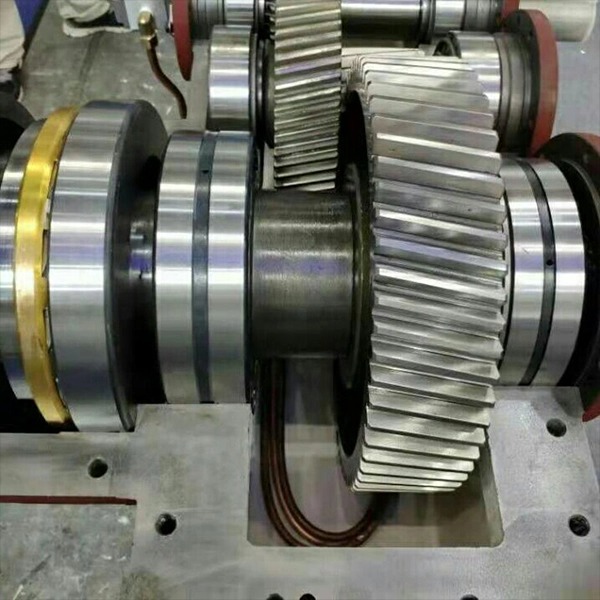
Durability is the primary concern for any factory manager. A Heavy Duty Extruder Gearbox must operate 24/7 in harsh environments. To achieve this, manufacturers focus on two areas: the "Box" (housing) and the "Gears."
We prefer ductile iron or high-grade cast iron for the housing. These materials dampen vibrations better than fabricated steel. In a Vertical Extruder Gearbox setup, the housing design is even more critical because gravity affects oil distribution differently than in horizontal models.
Excessive heat is the number one killer of gear teeth. A durable Extruder Gearbox must include:
Internal Cooling Coils: Copper pipes that circulate water through the oil sumps.
External Heat Exchangers: For Heavy Duty applications where internal cooling isn't enough.
Forced Lubrication: A pump system that sprays oil directly onto the gear teeth and bearings.
Without these, the oil breaks down, viscosity drops, and you face metal-on-metal contact. We always recommend a Precision unit with a built-in oil pump for any motor over 55kW.
The with Thrust Bearing component is what separates an Extruder Gearbox from a standard industrial gearbox. As the screw pushes the plastic forward, the plastic pushes the screw backward with equal force.
Integrated Tandem Bearings: These use multiple rows of rollers to distribute the load. They are found in High Torque units where a single bearing would be crushed.
Separate Thrust Blocks: Some Heavy Duty designs separate the thrust housing from the gear housing. This prevents heat from the thrust bearing from affecting the gear oil.
When comparing designs, check the "Calculated Bearing Life" (L10 life). A quality Extruder Gearbox should offer at least 30,000 to 50,000 hours of bearing life under rated loads. If the manufacturer doesn't specify this, they might be using inferior bearings that will fail prematurely.
Depending on your factory layout, you might choose a Vertical Extruder Gearbox or a horizontal one. The choice usually depends on the "footprint" and the type of extrusion (e.g., blown film vs. pipe).
These are common in blown film lines where the extruder sits below the cooling tower.
Pros: Saves floor space; direct alignment with vertical screws.
Cons: Lubrication is trickier; the top bearings often need a dedicated grease point or forced oil feed.
These are the standard for most pipe, sheet, and pelletizing lines.
Pros: Easy to access for maintenance; natural oil bath lubrication for most parts.
Cons: Takes up significant floor length.
We see a trend toward Vertical designs in urban factories where every square meter of floor space is expensive. However, for Heavy Duty recycling lines, horizontal remains the king of stability.
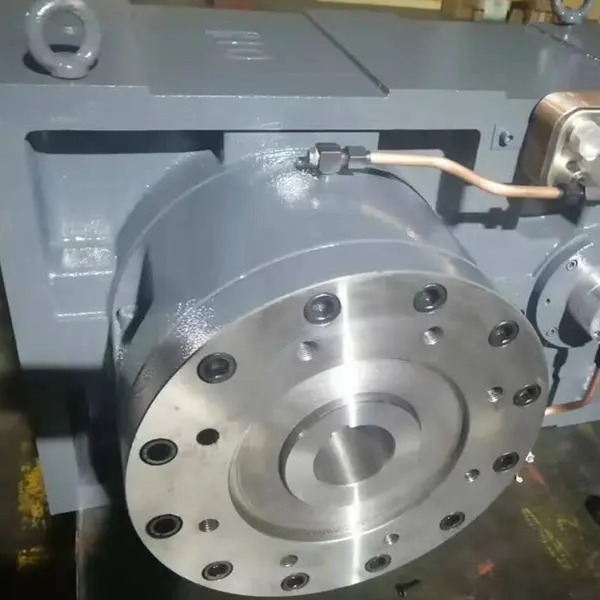
One size rarely fits all in the world of extrusion. A top-tier Extruder Gearbox manufacturer provides several customization layers to match the unit to the motor and screw.
Output Shaft Dimensions: The internal spline or keyway of the Extruder Gearbox must match your screw shank perfectly. Custom diameters and lengths are standard requests.
Mounting Flanges: If you are retrofitting an old machine, we can customize the transition flange to bolt directly to your existing barrel.
Sensors and Monitoring: For Industry 4.0, we add vibration sensors and digital oil temperature gauges to the Precision Extruder Gearbox.
Ratio Adjustments: Sometimes you need a specific RPM that standard ratios (like 10:1 or 12.5:1) can't provide. Custom gear hobbing allows for exact ratio matching.
Customization ensures that the High Torque output is used effectively without needing expensive adapters that introduce weak points into the drive train.
Even the best Heavy Duty Extruder Gearbox will fail if neglected. To maintain Precision levels over a decade, we suggest a rigid maintenance schedule.
Oil Analysis: Every 6 months, check for metal shavings. This is an early warning for gear wear.
Filter Cleaning: The oil pump filter in a High Torque unit collects debris. Clean it monthly.
Bearing Inspection: Listen for high-pitched whining. This usually indicates the with Thrust Bearing section is reaching its end of life.
Seal Replacement: Prevent oil leaks that can contaminate your plastic resin.
Using high-quality synthetic gear oil (ISO VG 220 or 320) is non-negotiable. It maintains film strength even when the Extruder Gearbox runs hot during a 24-hour shift.
Comparing Extruder Gearbox designs comes down to balancing your immediate budget with your long-term production goals. A cheap unit might save money today, but a High Torque, Heavy Duty design pays for itself through reduced downtime and higher output quality.
If you are running high-viscosity materials like recycled HDPE, prioritize a unit with Thrust Bearing upgrades and forced cooling. For precision medical tubing, focus on a Precision Extruder Gearbox with ground gears to eliminate "output surging" caused by gear vibration.
We recommend looking for manufacturers who utilize CNC gear grinding and offer a comprehensive warranty. It is an investment in the backbone of your production line.
1.What is the most common cause of Extruder Gearbox failure?
Most failures stem from lubrication issues or bearing fatigue. If the oil gets too hot, it loses its ability to protect the gear teeth, leading to pitting and eventual breakage. Regular oil changes in your Heavy Duty Extruder Gearbox can prevent 90% of these issues.
2.Can I upgrade my Single Screw Extruder Gearbox to handle higher torque?
Often, yes. You can replace an older unit with a modern High Torque equivalent that fits the same footprint. This allows you to run tougher materials or increase screw speed without risking a mechanical breakdown.
3.Why is the thrust bearing so important in an Extruder Gearbox?
In extrusion, the screw acts like a giant bolt being turned into a nut (the plastic). This creates a massive force trying to push the screw out the back of the machine. The with Thrust Bearing assembly is the only thing stopping that screw from destroying the motor.
4.How do I choose between a Vertical and Horizontal Extruder Gearbox?
Check your floor space and screw height. Use a Vertical Extruder Gearbox if you need to save space or are building a blown film line. Use a horizontal design for better stability and easier maintenance on large-scale pipe or profile lines.


